
Colorin was developed as a gamified app designed to teach colors, focusing on congenitally blind children. The project aims to make learning about colors accessible to everyone, using features such as screen readers, adjustable fonts, and gamified learning paths. The experience is inclusive and based on universal design principles to cater to all children, covering the meanings, associations, and combinations of colors.
Facilitate color learning for congenitally blind children by exploring non-visual associations.
Create an inclusive and accessible experience that complies with digital accessibility standards.
Use playful and educational approaches to engage children of different ages and conditions.
Develop an intuitive app for children with varying levels of technological experience.
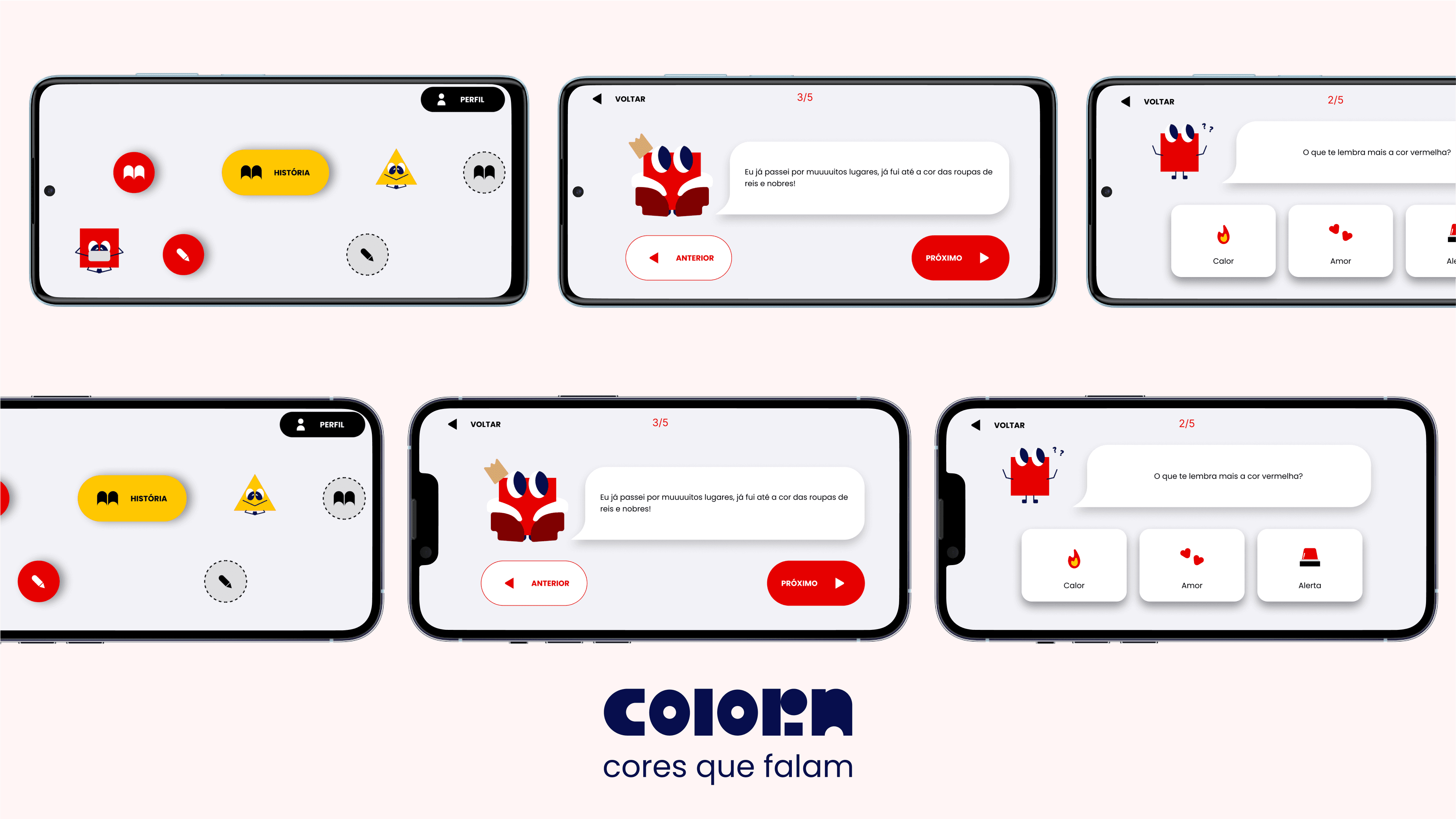
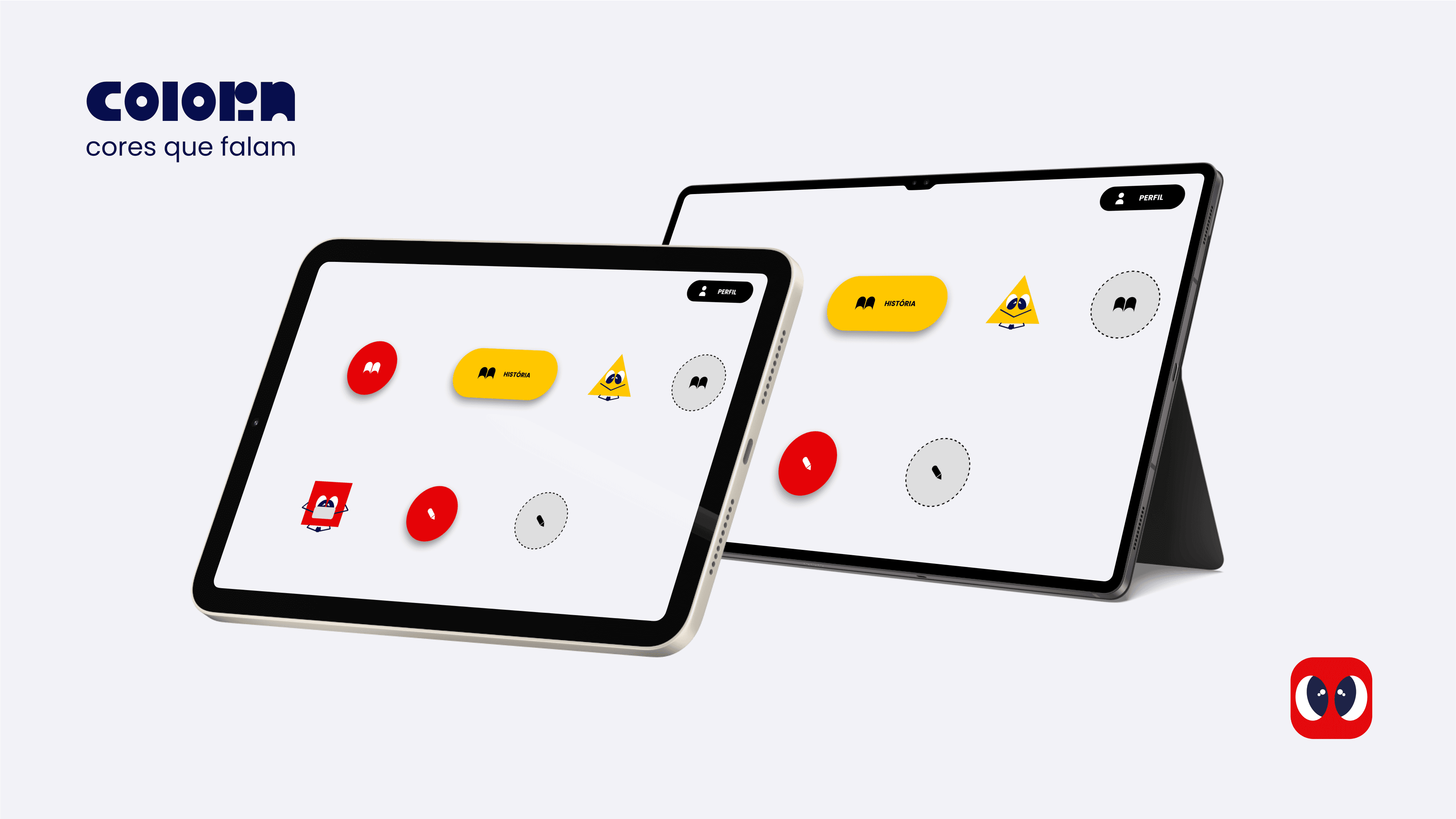
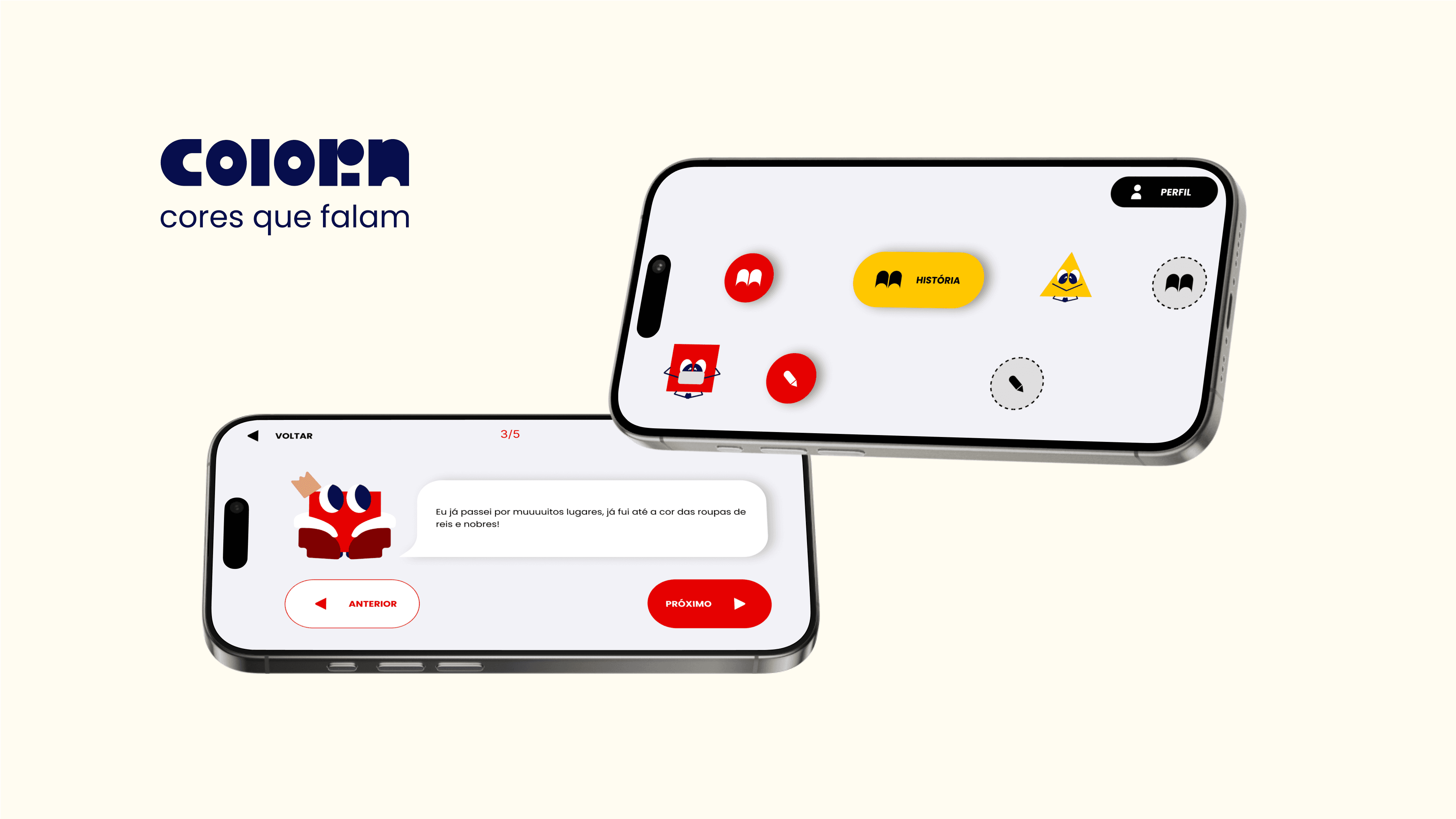
This project used the User-Centered Design methodology, combined with elements of Design Thinking.
Bibliographic research
Visits/interviews
Personas
User journey
Problem analysis and specification
Content separation
Reference research and benchmarking
Crazy 8s
Low-fidelity prototypes
App identity development
Design System development and documentation
High-fidelity prototypes
Beta version programming
Feasibility studies and outreach
Usability testing with the target audience
Colorin combines gamification and accessibility elements to teach colors. The app offers a learning path that explores the meanings, associations, and combinations of colors, incorporating inclusive features such as screen readers, adjustable fonts, and clear language. The design system was created to meet the needs of blind and low-vision children, among others, with a strong focus on accessibility guidelines and tone of voice.
Understanding the audience: Grasping the learning styles and daily lives of congenitally blind children was challenging, as was conducting interviews and tests with this audience for the first time.
Access to institutions: Finding schools and organizations willing to allow the research required persistence and effort.
Creating accessible content: Developing non-visual explanations and experiences demanded creativity and study, especially in the use of screen readers.
Usability testing: Introducing screen readers to children with no prior experience was initially challenging but highlighted the importance of gradual adaptation.
These challenges taught me how to conduct research with diverse audiences, strengthened my communication skills, and broadened my perspective on inclusive design. Additionally, I gained new knowledge in digital accessibility, UX Writing, and business strategies, enriching my practice as a designer.
ALINE REIS SILVA
São Paulo, Brasil