The essential question was: How to introduce music into everyday life through a utility application?
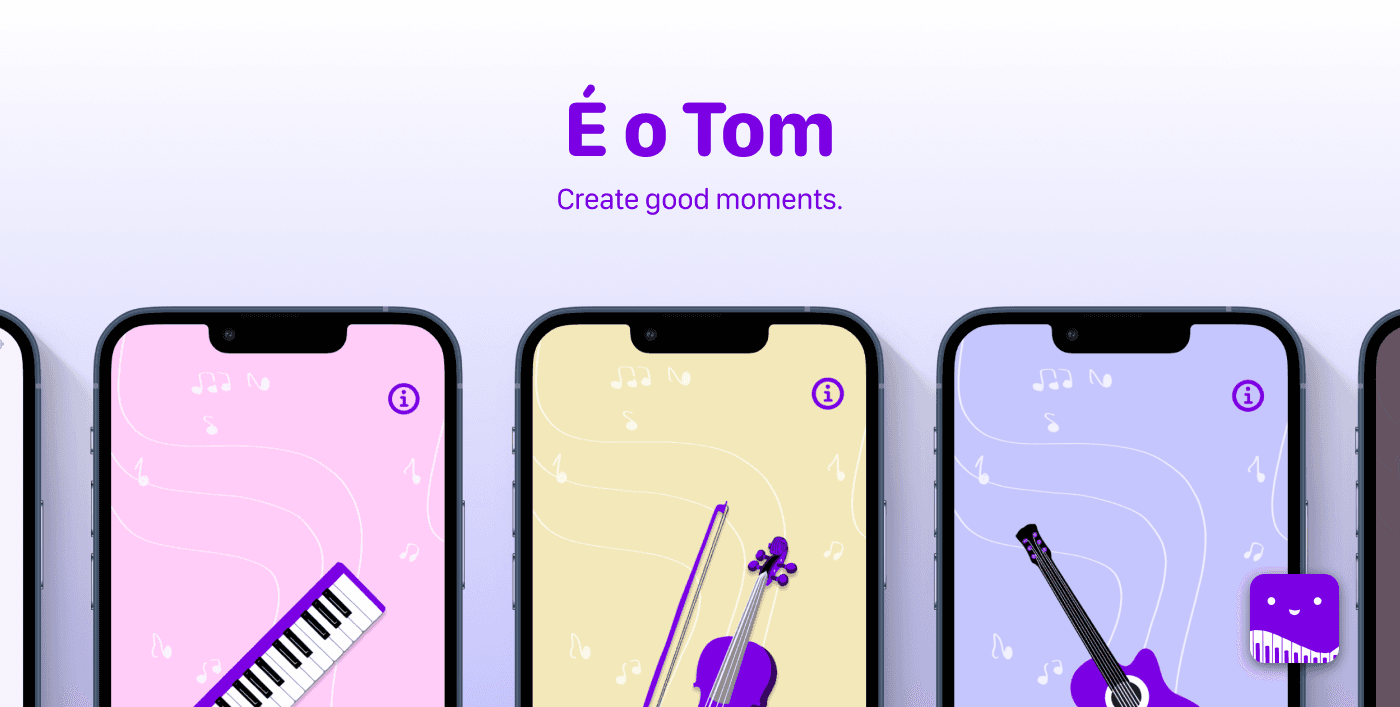
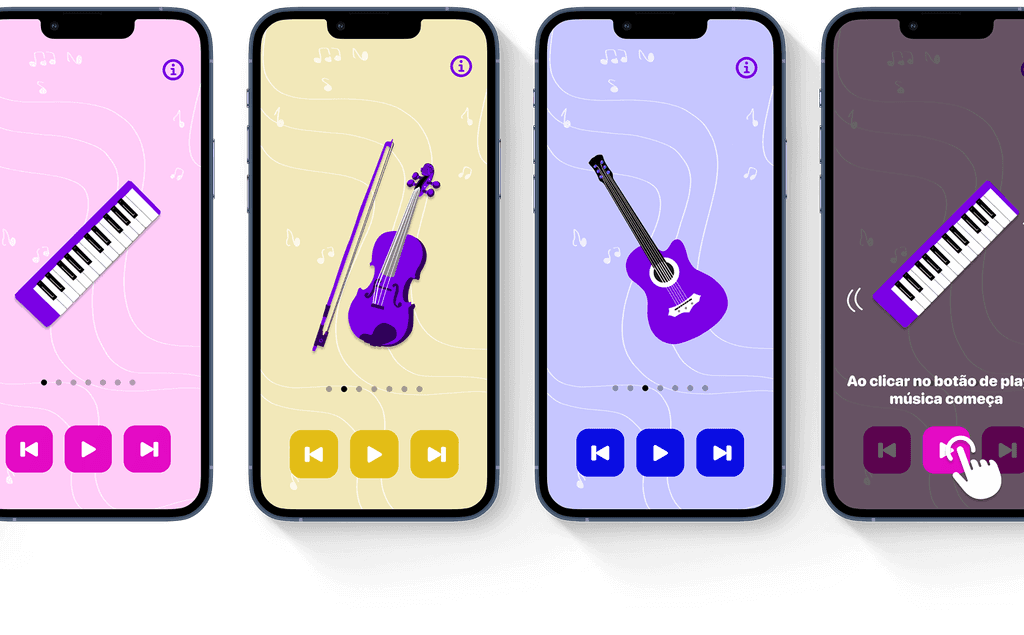
É o Tom is an application focused on assisting in the process of children's musicalization. The app was designed to provide an intuitive and educational experience, associating images with animations and sounds to introduce music to young children in a playful and accessible way.
The primary audience for É o Tom is children between 2 and 3 years old and their parents or guardians.
According to the Panorama Mobile Time/Opinion Box research on children and smartphones in Brazil:
36% of children between 0-3 years old have their own smartphone.
52% use their parent's smartphones.
Only 12% do not use smartphones.
This data highlighted the need to create a meaningful, educational experience that transforms passive screen time into an opportunity for musical learning and development.
This project used the Challenge Based Learning (CBL) methodology, combined with elements of Design Thinking.
Brainstorm of theme options
Identification of potential users
Identification of compatible solutions
Viability studies
Article research on children's musical learning
Conversations with a psychologist
Development of user personas and user journeys
SWOT Analysis
Semantic panel to guide visual identity
Low and medium-fidelity prototypes
SwiftUI studies to ensure technical feasibility
Design System
Custom illustrations
High-fidelity prototypes
User testing
Implementation and submission to the App Store
App promotion and outreach
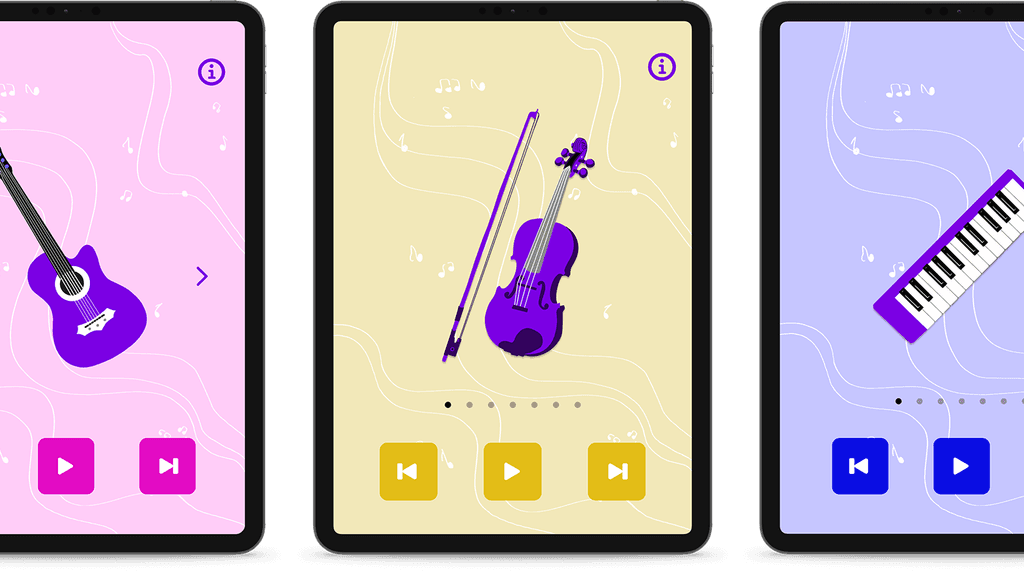
É o Tom is a bilingual (English and Portuguese) application that introduces music through interactive experiences. The app includes:
Three original songs and seven different instruments.
Each instrument's name is spoken aloud before the music plays, enhancing cognitive association and making the app accessible to children who cannot see the illustrations.
Light and dark mode options for a customizable user experience.
One of the major challenges was understanding how young children interact with smartphones and designing a product that enhances their experience rather than contributing to screen addiction. Conversations with a psychologist provided key insights into child development and attention spans, allowing us to tailor the app's interactivity and pace to the target audience.
Additionally, learning and implementing SwiftUI was a technical challenge, but it provided the flexibility to deliver a smooth, engaging user experience.
ALINE REIS SILVA
São Paulo, Brasil